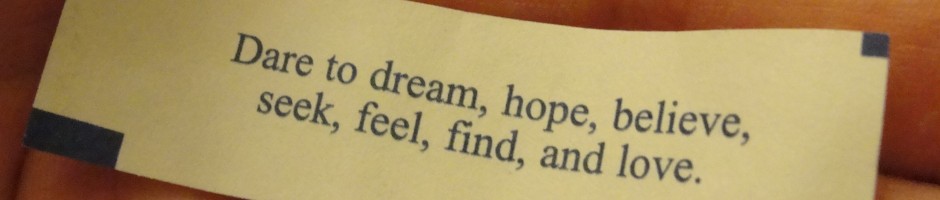
Relationships: Rubber, meet road
 Happy Valentine’s Day, dear readers!
My relationship track record is … ummm
… errrrrgh …
… uhhh …
(Do I really have to talk about this?)
Let’s just say, it isn’t all good. But, I wouldn’t say it’s all bad either. True, if you measure relationship success by the “long-term marriage/2.5 kids/ranch house/0.68 acre yard” metric, I have failed. But, then again, I’ve also never been one of those women who felt like motherhood was her ultimate destiny in life. I prefer my current dwelling – a small apartment in a walkable/fairly urban area – over a big house in the ‘burbs. It’s just how I’m wired; I like walking to things and having close access to public transportation.
I’ll also add that this is the most difficult post I’ve written so far, because, truthfully, it’s an area where I haven’t quite gotten past the feeling that people are judging me. As much as I know that isn’t true (and doesn’t matter even to any degree that it is), it still haunts me.
I am divorced. I have some other long-term relationships scattered through my past. To be sure, I chose poorly at times for the people with whom I paired. But, let’s examine the first two words of that last clause: I chose. Now, the just first one: I.
It would be so easy to lay the blame at the feet of these other people, to say it belongs entirely to them that things didn’t work. Certainly, the responsibility isn’t solely mine, but it’s not all theirs either.
For a long time, I had a pattern of getting into relationships with people who really weren’t what I wanted. But through some magical way of thinking, I thought they could become what I wanted. Then I resented them when they didn’t. This is sort of like saying you want a turkey sandwich, but seeing you only have peanut butter in the fridge, then eating the peanut butter anyway, but blaming it for not being turkey, pleading with it to become turkey, and actually getting outright angry that it isn’t turkey. As you can see, it isn’t the most rational of thought patterns.
Another issue I’ve had (even in my better relationships) is communication, particularly in terms of feeling like it’s acceptable for me to have needs, and to ask for them to be met. I was afraid that by saying that I wanted something, my partner would think of me as too needy. Or, they’d deny what I wanted, and then it would just be proof that they didn’t love me anyway. So I’d stuff those needs away, square my shoulders and move forward, albeit with a jaw that was clenched a little tighter, and the seeds of resentment rapidly propagating in my gut.
At this juncture in life, I am not dating and not seeking a relationship. I’m focused on other things and prefer to devote all of my energy to myself. But I would like that for myself in the future and have faith that God will bring the right person into my life, when the time is right. The bottom line is that I’ve learned that a relationship isn’t just two people who know each other and hang out a lot or even live together while letting the chips fall where they may. They take a lot of work and emotional energy, and it can’t fall to just one party to give all of that. A relationship is a living organism, and your “gardening skills” can leave you with either a beautifully blossoming orchid, or a bed full of weeds.
What are your relationship challenges?
YSOS Book Club: Codependent No More
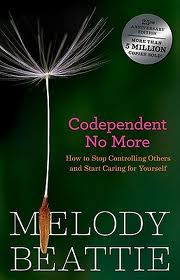 Codependent No More: How to Stop Controlling Others and Start Caring for Yourself
Melody Beattie
If I asked you to describe someone who is codependent, how would you answer?
Maybe you picture someone who is meek, quiet, unable to make a decision. Someone who isn’t likely to speak up all that often. A synonym for “door mat.”
Some of those perceptions are true, to a degree. But as someone who identifies as codependent myself, I can tell you that they come in all stripes. I encounter them every day. And there are a lot of us out there.
To a degree, I think society promotes our codependence, especially for women. I mean, it’s always considered a good thing to “be nice,” right? The problem comes when “being nice” to someone gets confused with “being responsible” for someone. We become caretakers for other people’s lives, actions, emotions. We put other people’s feelings before our own. We try to control other people and feel angry or hurt when they don’t do what we want them to do. Likewise, other people try and succeed at controlling us.
How many times have you not done something you really wanted to do – which wouldn’t have created actual harm to another person – simply because somebody else didn’t want you to? Or maybe you did it anyway, but then felt guilty for it. How many times have you put someone else’s needs before your own? Maybe later, you even resented the other person or people because you did that.
That’s just a slim sampling of codependent behavior. Nearly 30 years after its original printing, Codependent No More remains the tried-and-true manual to identifying codependent behavior, and better yet, breaking free from it. Beattie gives a number of real-life stories of codependents in action to help the reader identify. She also offers plenty of writing exercises to help you identify your own patterns and behaviors.
If you’d like to stop living as a victim … stop worrying so much about what other people think and do … stop feeling like your own priorities always come last … this is the book for you. Start reclaiming your own life.
Healing the Child Inside
 Louise Hay posted an interesting article today about healing your “inner child” — in essence, examining your childhood wounds and soothing that child that still exists within you, even as you’re walking around with these wounds as an adult.
This is rather timely for me in a number of ways. Mostly, it’s because I had one of the most emotionally profound experiences last week, when I was able to very deeply and intimately get in touch with my own inner child, feeling the pain I experienced back then but able to process it with adult emotional intelligence. It’s difficult for me to describe to someone who has not done this kind of work, or who might not understand it. But it was very, very real.
As the result of a recent breakup, I’ve spent times swinging between anxiety and sadness/loneliness (with some peaceful moments in between). But after a while I developed a lot of scorn for those emotions, just wishing they would go away and I could heal and move on. I was, in essence, “yelling at myself” for feeling these unpleasant feelings. I couldn’t understand why it would seem like I would get to a place of healing, only to find myself emotionally knocked down days later.
Somehow, some way (I truly believe through God), I was able to understand that these feelings were actually stemming from a very child-like place. The more I got in touch with it, I saw that it was a very scared little girl, who was feeling hurt and sad and lonely. She wondered if anyone would ever love her. She was in a lot of pain.
More evaluation revealed that this was me, around age 4 or 5. Somehow I had gotten the feeling that there was something wrong with me, that nobody loved me. At that time I couldn’t grasp or understand it. But I remembered thinking very clearly … “maybe if I’m just very, very quiet, and really good, they’ll love me.” From this I came to believe that who I was on the inside was not acceptable to show on the outside, and that I couldn’t ask for help or show that I really wanted or needed something. These are problems that have plagued me for years.
I was at yoga that night and I imagined this little girl next to me, doing the poses with a joyous and childlike spirit – the way she wanted to be, but felt like she wasn’t allowed. I spoke to her with the love that I so wanted back then, and told her that she was precious and beautiful exactly how she is. That night, I cried the most anguished tears, but I was crying the tears of that child who wasn’t able to cry them back then, or didn’t even understand why she felt sad in the first place.
Now I’m much more in touch with this piece of myself, and in the future I’ll be able to identify it when those feelings come up for me again.
To live a fulfilled adult life, it’s worthwhile to discover your childhood wounds and work on the process of healing them. Don’t think that just because the years have passed, they aren’t haunting you still. Find that child, and love it well.
Unfair Accusations
 Today, something happened at the gym that caused someone to accuse me of something that was untrue, unfair, and just plain hurtful. I was called “racist.”
To summarize, the person who accused me showed up a few minutes late for my class. It was already very crowded, and I had announced the week before that latecomers would not be permitted entry due to the class size. This woman arrived late, and I told her she couldn’t stay. Apparently she went to the front desk and issued a complaint about this – and hit the hot button as part of it.
I don’t want to get into that particular issue too much, because it is extremely polarizing and can be perceived so many different ways. Never in a million years would I say that racism doesn’t exist. But what this woman did was just as hurtful in reverse – she knew nothing about me and my attitudes toward race. All she knew was that she didn’t get what she wanted from me, and then made a judgment based on that information.
Thing is, this is where I can see that I’ve developed confidence in who I am. I know I am NOT racist. I saw this woman after the class and tried to apologize to her and explain what had happened (she had never been in my class before) – before I knew what she had said about me. But she had already made up her mind. Her ears were closed. She did not want to listen to me.
In years past, something like this would have been devastating to me. And while I’m clearly bothered by it still, I’m not crushed. I know who and what I am. This is a gift of my journey. Given the same set of circumstances, I would not have acted any differently. And if gym management comes to me to talk about the situation, I’ll be confident in my answers and my assertion that I didn’t do anything wrong, and I certainly did nothing motivated by hate.
Today, I am grateful for knowing who I am, and that someone’s unfair and unkind judgments about me aren’t a part of that.
How have you built self-confidence?
Profound Forgiveness
What if, even in the face of someone else causing you unspeakable harm and tragedy, you were able to forgive them immediately? If you kept the resentment from burrowing deep within you, haunting and anguishing you?
This is the story of Rais Bhuiyan. In the wake of 9/11, Bhuyian was the victim of a hate crime. A man named Mark Stroman was randomly targeting people he thought were of Muslim or Middle Eastern descent. Stroman killed two men in addition to wounding Bhuiyan. He was executed in July 2011.
I saw this article in my Facebook newsfeed today – I actually think NPR posted it erroneously, since it was a year and a half outdated – and I put aside the post I had already written. What makes this story remarkable is that Bhuiyan says he never hated Stroman in return. He actually worked to save him from death row. He used his faith to find the power to forgive.
I am deeply moved by the ability for someone to be so emotionally free and to move on with grace. Instead of seeking retaliation, he sought to give his attacker salvation.
It gives me much pause to consider the resentments to which I am clinging, the wrongs I’ve been unable to forgive. In reality, they’re only causing harm to me, not their targets. As the saying goes, resentment is like drinking poison in hopes that someone else will die. It only pollutes my own spirit but does nothing to change the past or heal the wounds.
How have you found forgiveness – for yourself and others?
 Young Spirit, Old Soul